COMPACTION WHEEL TECHNICAL TRAINING
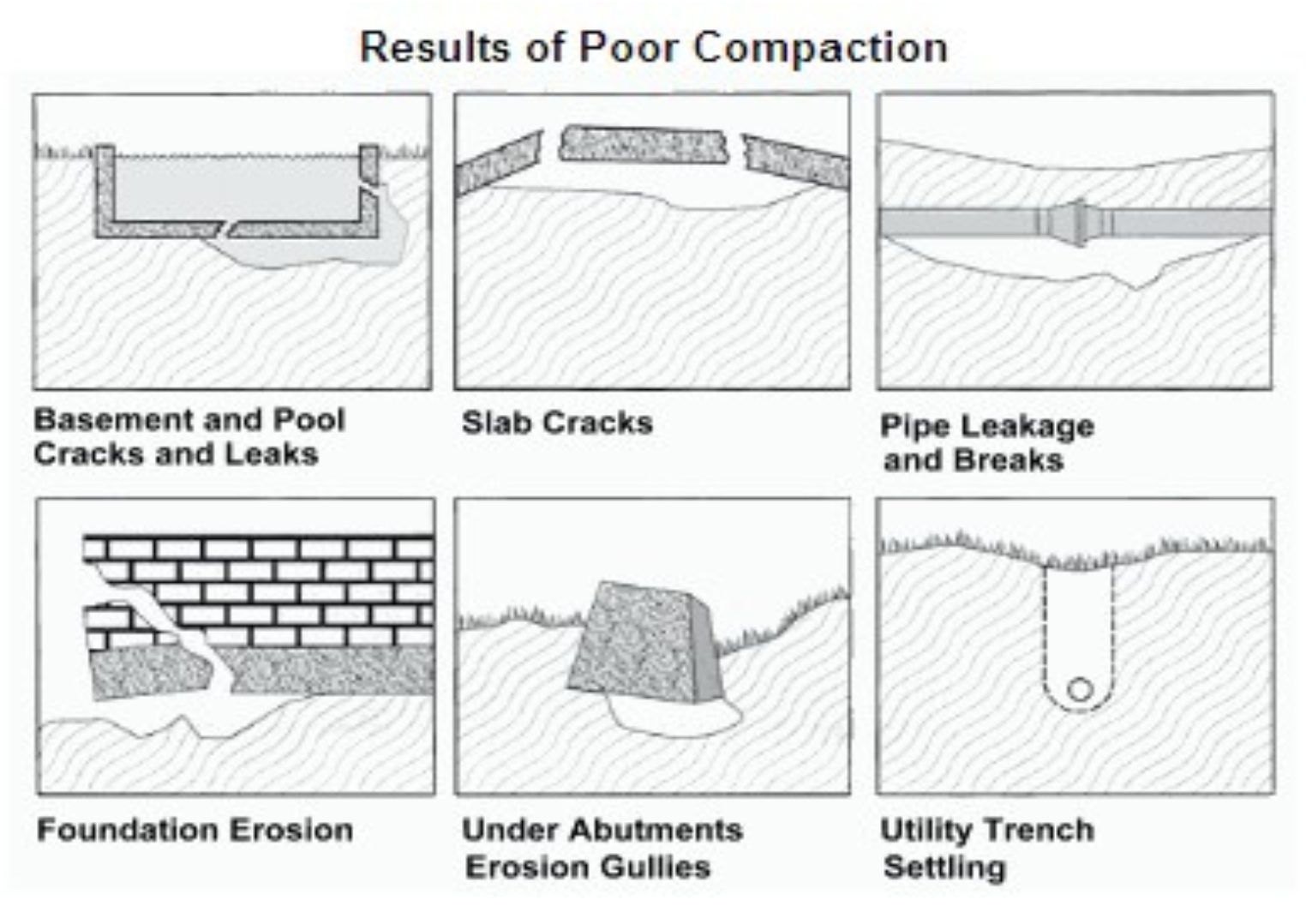
Soil compaction prepares the ground for structures, pipe and to apply cover (concrete or asphalt for example). Soil Compaction increases the strength and density of the soil while decreasing the permeability (ability of the soil to absorb water). There are five primary reasons to compact soil:
- Increase Load Bearing Capacity
- Prevent Soil Settlement
- Provide Ground Stability
- Reduce Water Seepage, Swelling and Contraction
- Reduce Frost Damage
Soil compaction requirements are controlled by local and state codes with soil compaction inspections required for most projects. It is the contractor’s responsibility to make sure the soil is properly prepared and inspected.
Types of soil compaction
There are two types of Soil Compaction equipment for construction applications:
(1) Static Force Compaction
(2) Vibratory Force Compaction
For both types of compaction, various machines and attachments are used to meet compaction requirements.
Dedicated Machines
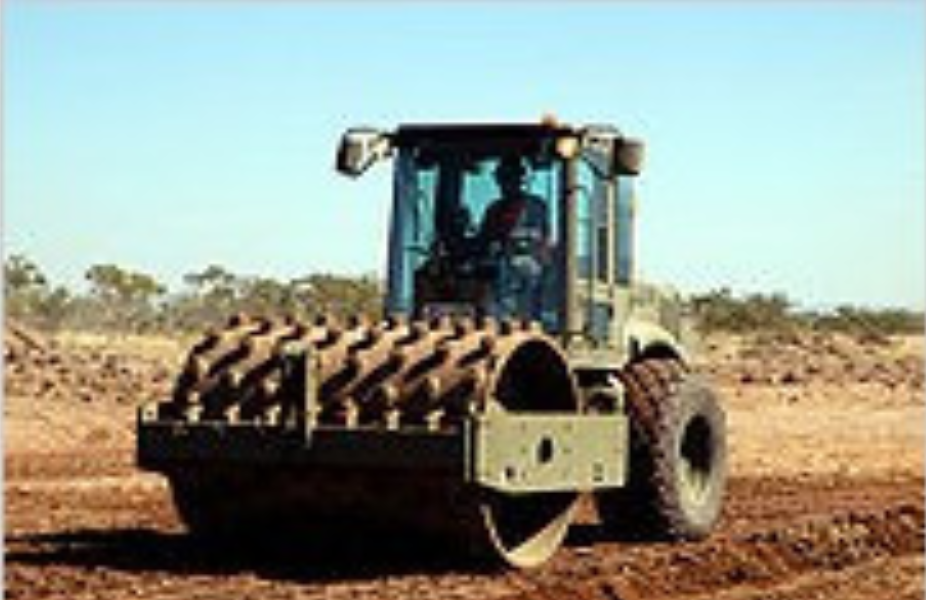
Large areas require dedicated machines specially built for compaction purposes.
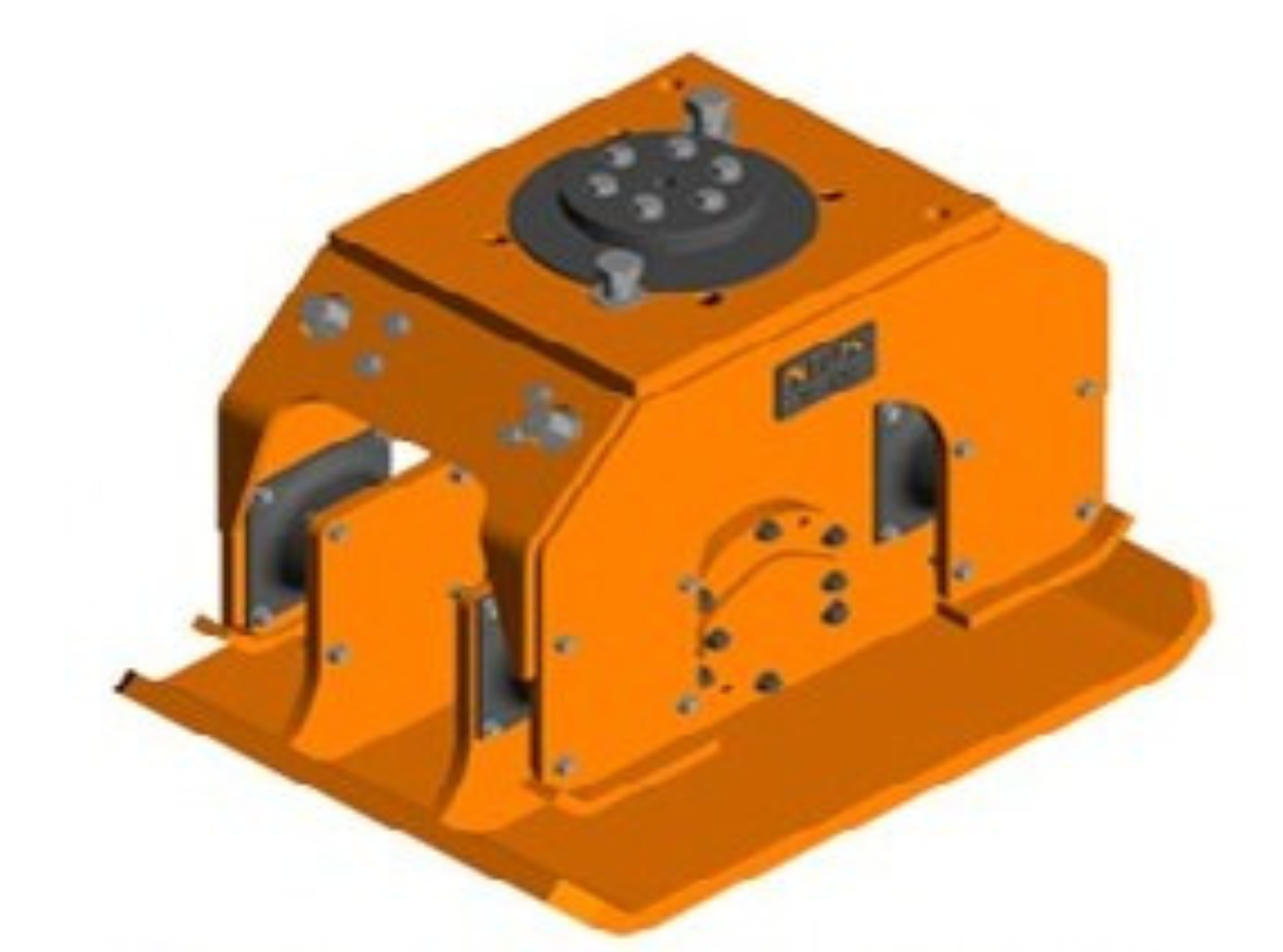
Vibratory Compaction Attachments
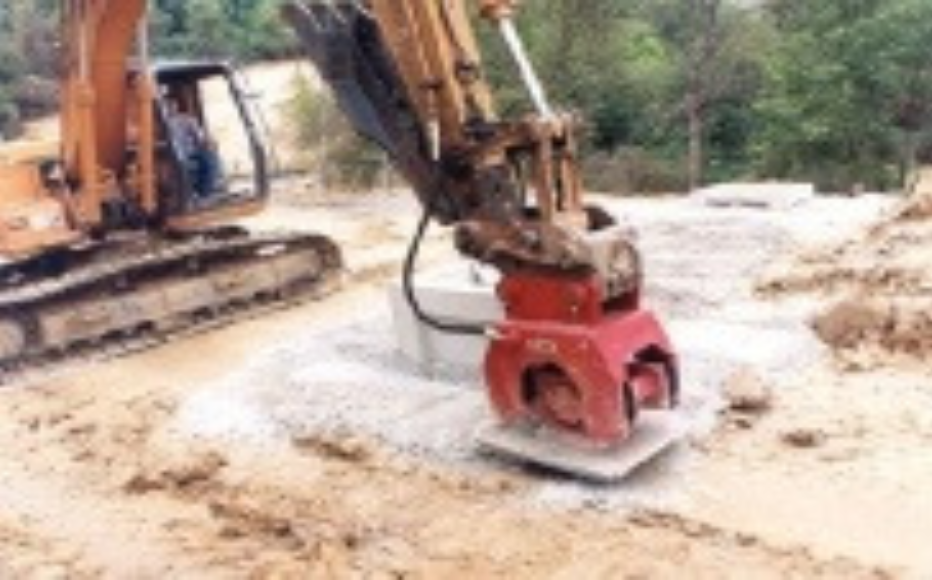
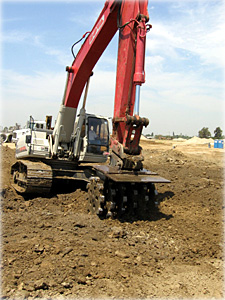
For smaller areas such as foundations and trenches, attachments that mount onto excavators, backhoes and skid steers are preferred. Vibratory Plate Compactors are better for sand, gravel and aggregate and provide a smoother surface finish. The excel in very tight spaces. But vibratory compactors are more complex to install and maintain. They require additional hydraulics and the vibration is hard on your machinery.
Compaction Wheels
Compaction wheels provide a number of advantages over vibratory attachments. They provide better productivity, better soil compaction, quicker installation and setup, and less cost to maintain. Compaction Wheels offer a higher productivity than plate compactors when utilized for Trench and Foundation work. By design, Compaction Wheels can cover more ground in shorter time than Plate Compactors.
Wheel Design: Open Rim verses Drum
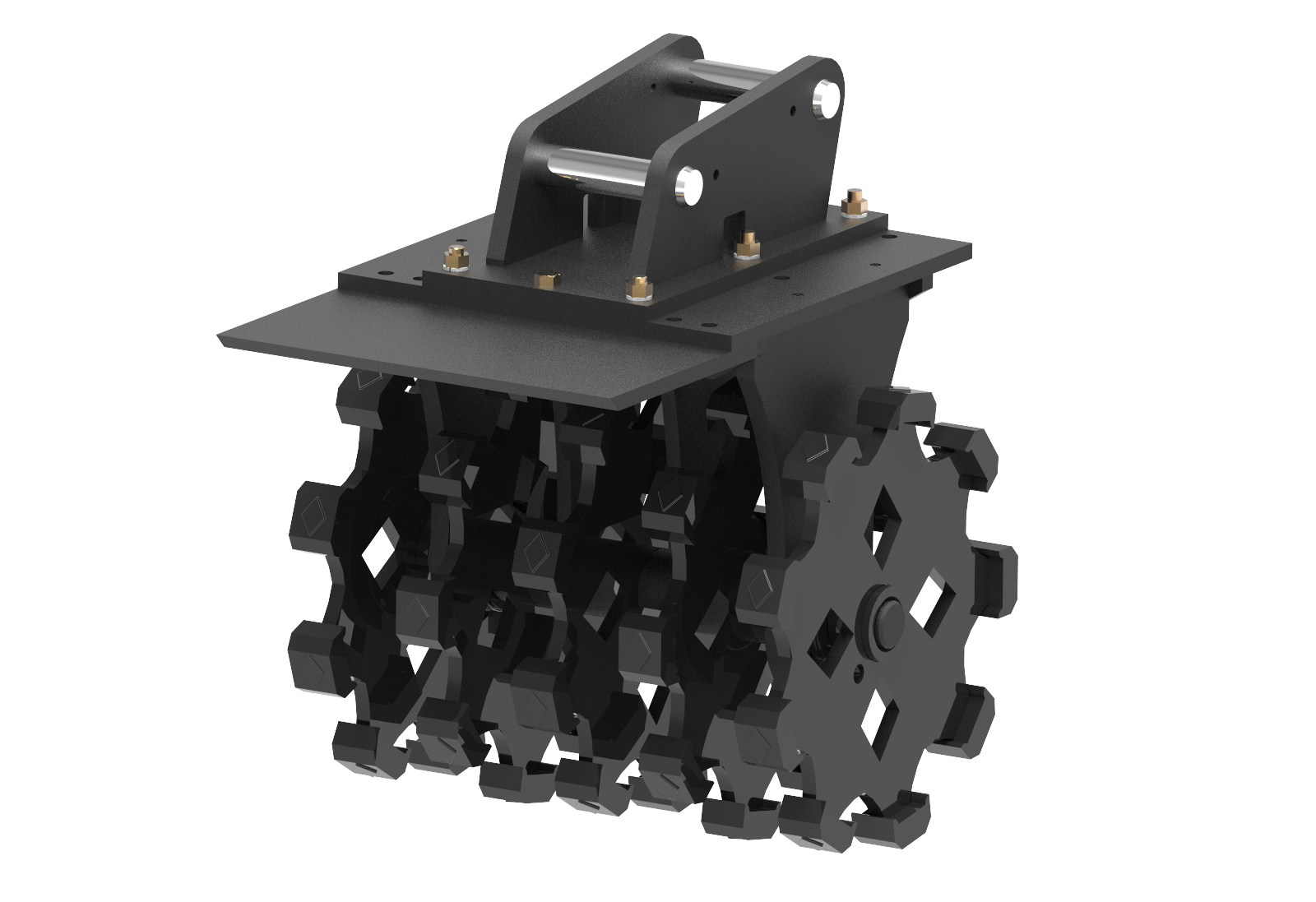
ACE Open Rim Design Compaction Wheels
The open rim compaction wheel design used by ACE offers superior performance to the drum design used by many other suppliers. Open rim compaction wheels provide better soil penetration, effective on a wider range of soils, and there is less soil buildup than drum type wheels.
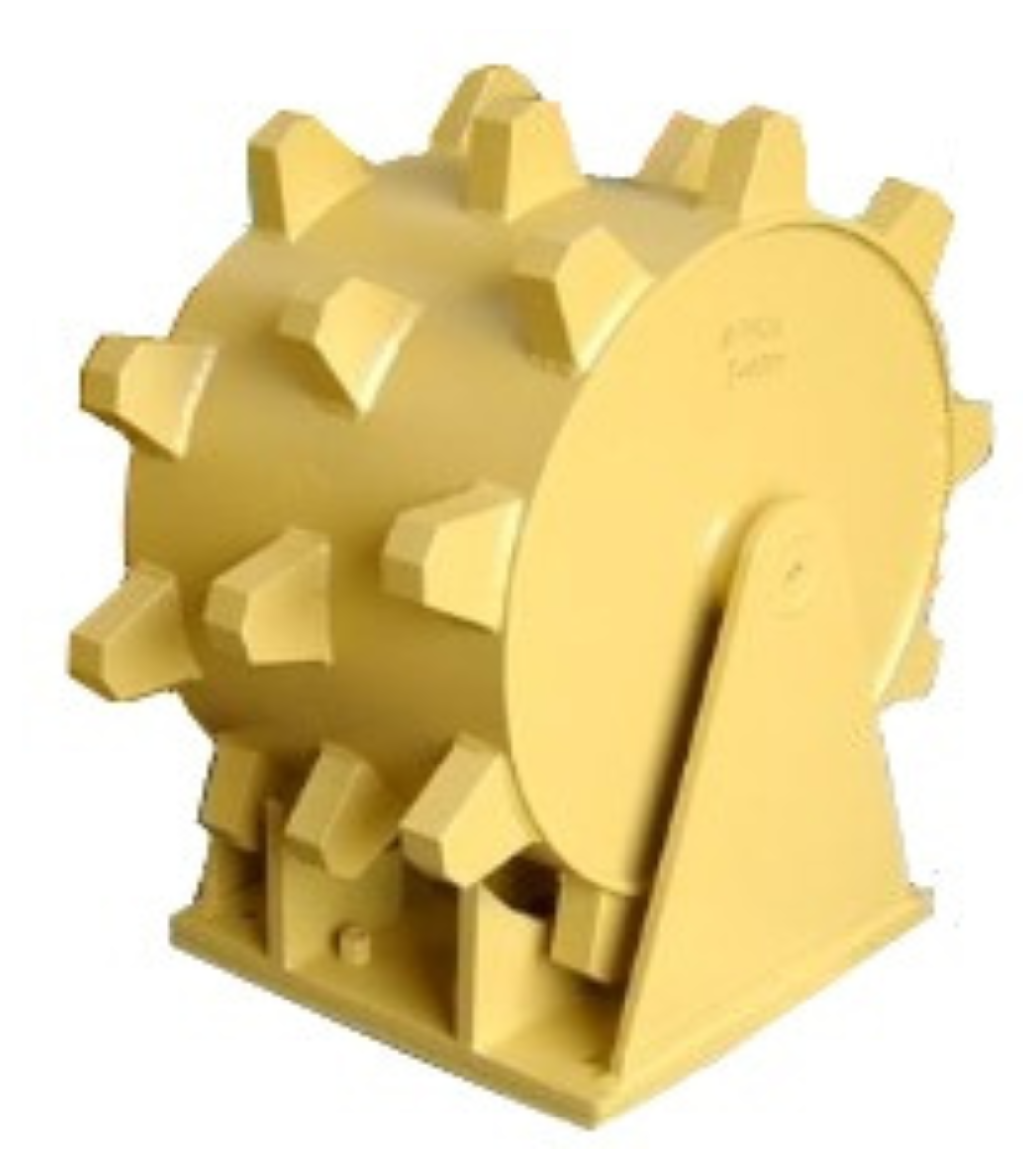
Drum Style Compaction Wheel
Although simpler in design, the drum style wheel is less effective than the open rim design. Still interested in a drum style wheel? ACE can provide you this product, see our Custom Compaction Wheels.
How open Rim Wheels compact
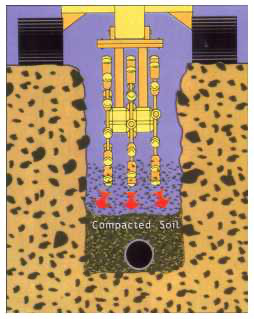
ACE Open Rim, Better by Design
The open rim design is able to penetrate through the lift of trench fill and compact the soil from the bottom up rather than the top down. Once an operator becomes accustom to this wheel, they can determine when the desired compaction has been reached by the “feel” of the wheel through machine hydraulic controls. Only 6-10 passes are generally sufficient to achieve 95% or better standard density in most soils.
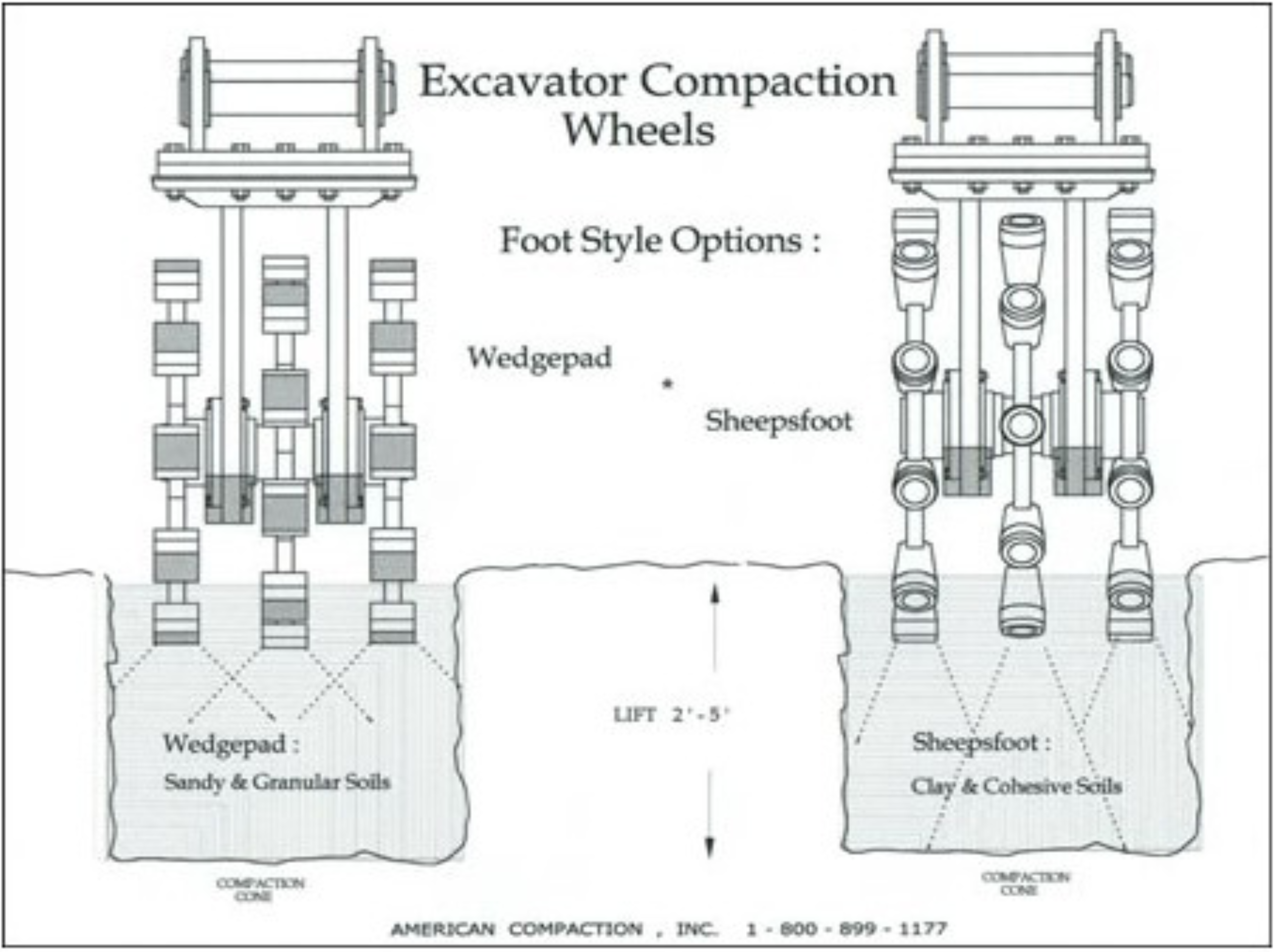
Compaction Wheel Foot Styles
- Wedge Pad – standard on all ACE compaction wheels.
- Sheeps Foot – available as an ACE Custom Compaction Wheel and provides advantages in clay and cohesive soils.
The ACE Product line
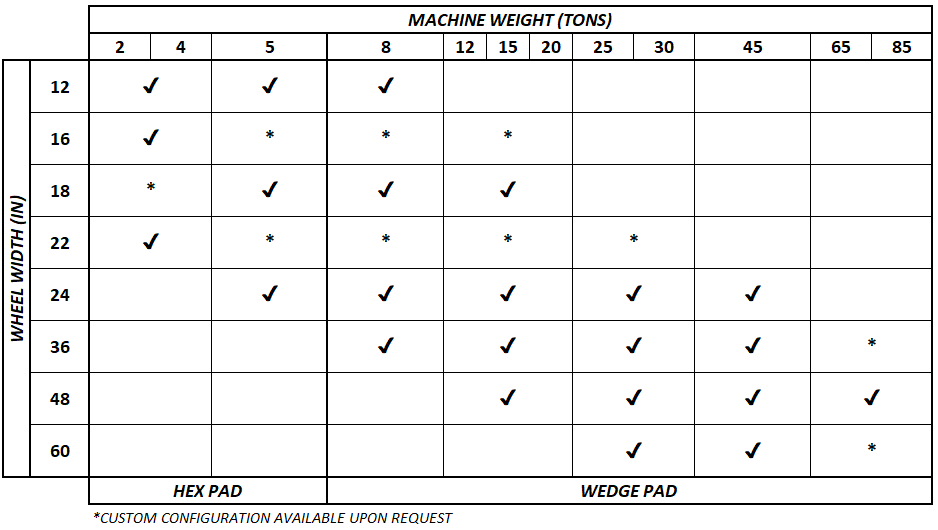
ACE produces compaction wheels and adapter plates to fit a large range of machines and applications. For the most up-to-date specification, go to the ACE home page.
This chart shows the standard product line with machine tonnage across the top and wheel size on the left. Note that ACE can provide custom wheels for any of the designs not shown as standard.
WP – wedge pad
HP – hex pad
SF – sheeps foot
S, B, BL etc. are weight classes